


SEO / GEO / LLM
I had a call a few weeks ago with a founder who runs a mid-sized recipe and lifestyle site. He was convinced Google had it out for him. Traffic had been sliding for months, half his URLs were sitting in "crawled, currently not indexed," and he'd already spent three weeks disavowing links he was sure some competitor had built against him. When I pulled up his site on my phone, the actual recipe was under a life story, two newsletter pop-ups, and an ad that pushed the whole page down before I could even find the ingredients list. That was the problem. Not the links.
That conversation kept coming back to me when I listened to the newest episode of Google's Search Off the Record podcast, where Martin Splitt and John Mueller sat down to talk through the Page Indexing report in Search Console. It's normally a dry topic. This time it wasn't, because about halfway through, Mueller said something that a lot of site owners need to hear directly from Google instead of from an SEO like me: quality is not just about your text.
I want to walk through exactly what they said, why it matters more than it sounds like on the surface, and what I'd actually tell a client to do about it starting this week.
What Splitt and Mueller Were Actually Talking About
The episode started with something practical. If your site is brand new, or you've just published or changed a batch of pages, the Page Indexing report in Search Console will walk you through the stages Google goes through before a page shows up in search. Splitt laid it out clearly: a page can sit in "discovered, currently not indexed," which means Google knows the URL exists but hasn't gotten around to crawling it yet. Or it can move to "crawled, currently not indexed," which means Google visited the page and decided, at least for now, not to put it in the index.
Those two statuses look almost identical in Search Console. They are not the same problem, and they don't have the same fix.
| Status | What It Actually Means | What Usually Fixes It |
|---|---|---|
| Discovered, currently not indexed | Google knows the URL exists but hasn't crawled it yet. Often a crawl budget or priority issue. | Internal linking, sitemap hygiene, site speed, patience on new sites |
| Crawled, currently not indexed | Google visited the page and chose not to index it. Frequently tied to quality, not tech. | An honest look at content value, uniqueness, and page experience |
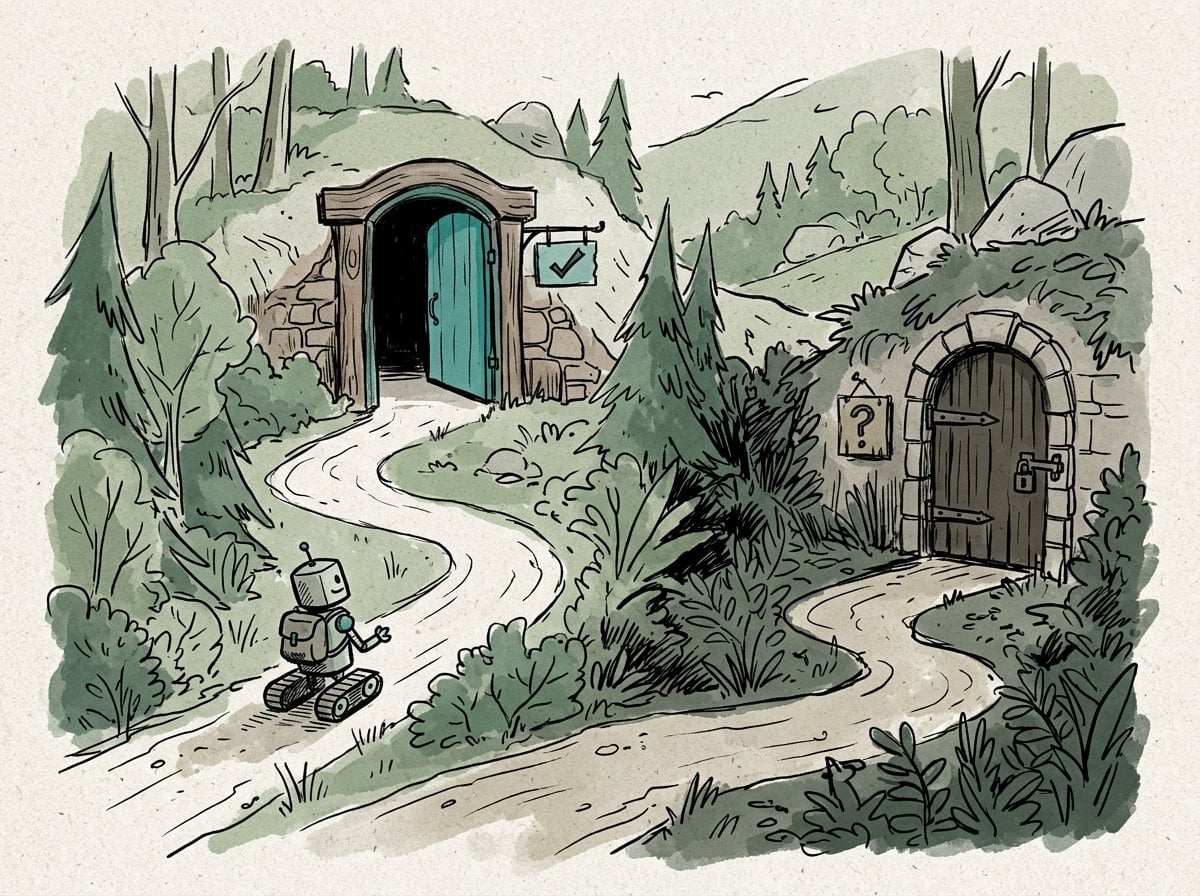
Two statuses, two very different problems: one is a waiting game, the other is a judgment call.
Splitt asked Mueller directly whether that "crawled, not indexed" status is often a sign of a quality problem, or just sometimes. Mueller's answer was blunt: sometimes. Not always. But when it is, the reason behind it is worth sitting with.
🎙️
What Mueller Said, In His Own Words
Mueller explained that when Google's systems have real concerns about a site's overall quality, they pull back. They crawl less, they index less, and the site owner starts seeing a pile of "crawled not indexed" and "discovered not indexed" pages. From Google's side, it's a resourcing decision. Why would their systems keep spending crawl budget and index space on a site they're not confident in yet?
Why "It's Not a Technical Problem" Is the Hardest Thing to Hear
Here's the part of the conversation that stuck with me the most, because I've lived it with clients more times than I can count. Mueller made the point that when a site owner sees a pattern of unindexed pages and there's no obvious technical reason, the instinct is almost always to go looking for a technical reason anyway. A broken robots.txt rule. A canonical tag pointing the wrong way. A negative SEO campaign nobody can quite prove. Anything other than the possibility that the content itself isn't good enough.
I get why. If you've built a site, it's yours. You know how many hours went into it. Mueller actually said something close to this himself, that it's genuinely hard to step back and evaluate your own site's quality because it's your baby, and of course you think it's the best baby ever. That line got a laugh in the episode, but it's true, and it's the exact reason so many audits stall out. Nobody wants to be told the thing they built isn't good enough yet.
We wrote about this exact trap a while back when we looked at why content won't rank even when everything looks technically fine. The pattern shows up again and again. Sites that pass every crawlability check and still can't get traction, because the real issue was never in the code.
💡 Did You Know
67% of all "not indexed" pages flagged for quality reasons fall under statuses that look like crawling issues on the surface. An independent study of over 500,000 unindexed URLs found that "URL is unknown to Google" and "discovered, currently not indexed" together made up that share, according to research published by Indexing Insight. That's the majority of quality-driven exclusions hiding behind statuses most site owners assume are purely technical.
Quality Isn't Just the Words on the Page
This is the part I think most site owners miss entirely, and it's the reason I wanted to write this piece. Mueller went out of his way to say that quality conversations get too narrow. People assume if their sentences are unique and their facts are accurate, they've covered quality. Mueller pushed back on that directly. He brought up the example of a page with genuinely good, unique text that's packaged so poorly that loading it makes a visitor's laptop fan spin up in protest. His words, more or less. The point wasn't really about laptop fans. It was that Google is trying to evaluate the entire experience of landing on your page, not just the paragraph you consider your "main content."
He described it as the full experience. Ads stacked on top of ads. Interstitials that pop up before someone can read a sentence. Content buried under a wall of filler text before the actual answer shows up. His specific example was recipe sites, which I found almost funny given the call I mentioned at the top of this article, because that is precisely the pattern he described. A long, meandering story sits on top of the page, and the recipe someone actually searched for is buried three thousand words down.
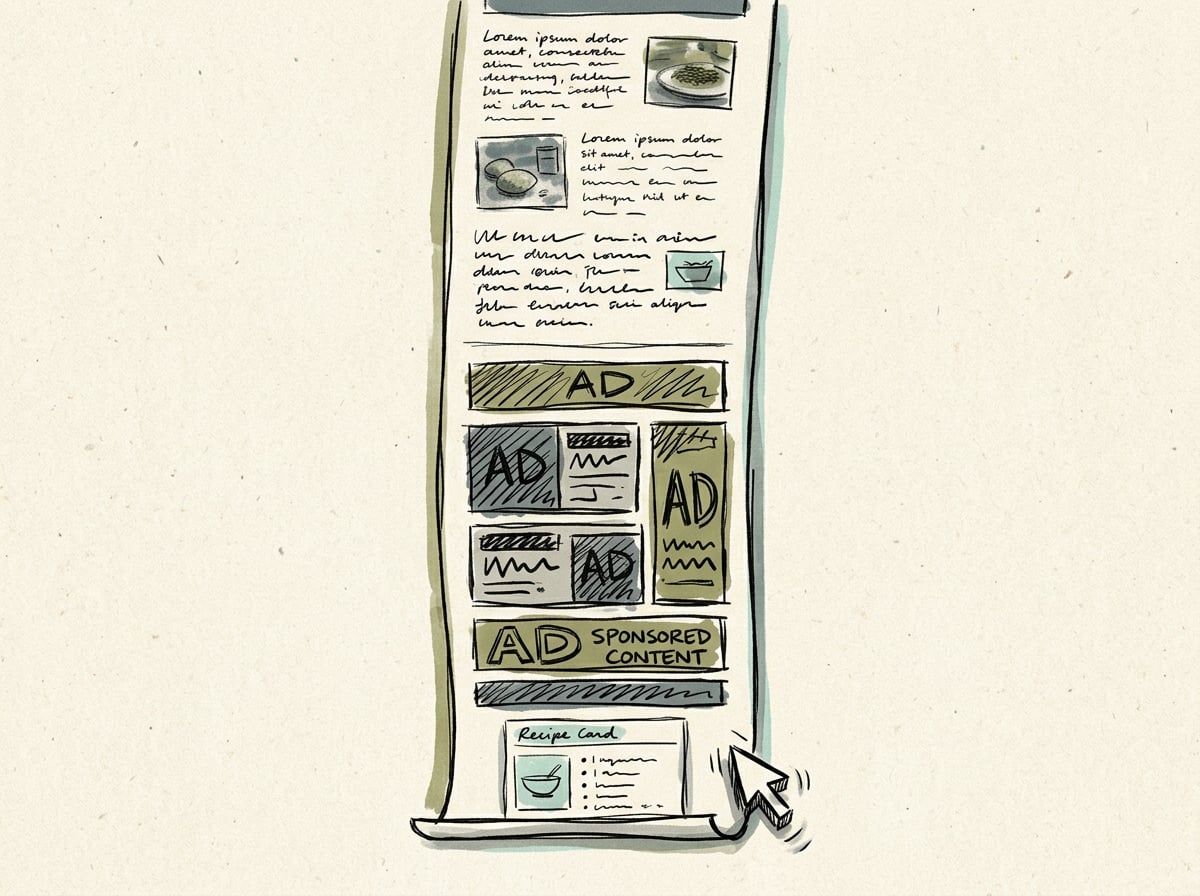
The recipe is in there somewhere. Good luck finding it before you give up scrolling.
Users don't visit a page and flip on some special mode that filters out everything except the text. They experience the whole page, ads, animations, and all of it, the same way anyone would.
That's a paraphrase of the point Mueller made, but it's the core of it. Google isn't just crawling your paragraphs. It's trying to approximate what a human feels when the page loads.
The Data Backs Him Up
This isn't just a philosophical stance from Google. There's real behavioral data behind why page experience gets tied to quality signals. Google's own research, cited widely by Marketing Dive, found that more than half of mobile visitors abandon a page if it takes longer than three seconds to load. Separate industry analysis has shown bounce probability climbing sharply, by roughly a third, as load time stretches from one second to three.
📊
Why This Matters For Indexing
If a huge share of visitors bounce before they even see your content, that's a behavioral signal. Google has spent years building systems that infer satisfaction from how people actually use a page, not just from what the page contains. A page nobody sticks around for doesn't need to occupy space in the index, regardless of how well-written the copy is.
Where AI-Generated Content Fits Into This Conversation
Mueller didn't say all AI content is bad. He said something more useful than that.

Google's systems aren't reading your words so much as sizing up the whole page, one skeptical pass at a time.
Mueller brought up AI content specifically, and I appreciated that he didn't take the lazy route of saying all AI-written content is bad. He was more precise than that. His point was that a site made up mostly of AI-generated pages can work for a while, right up until visitors start noticing. And when they notice, what they notice is a lack of anything unique or valuable. His phrase was something close to "anyone could have written this, this tells me nothing," and that's a gut check every content team should be running on their own output.
Splitt made a good addition here too. He pointed out that even genuinely well-written content runs into a different version of the same problem: there's simply too much other material out there covering the same ground just as well. If a hundred other pages already say the same thing at the same level of quality, why would Google's systems prioritize indexing yours?
We dug into this from a slightly different angle in a piece on why scaled AI content keeps collapsing in Google, and the crawl data we looked at there lines up almost exactly with what Mueller described in this episode. Sites that scaled content production without scaling actual originality saw crawling and indexing drop off a cliff, not gradually, but in a pattern that looked a lot like Google quietly deciding it wasn't worth the effort anymore.
The "Discovered vs. Crawled" Distinction Actually Matters for Diagnosis
I want to slow down on this because I see people conflate these two statuses constantly, and it leads to wasted weeks chasing the wrong fix.
- If most of your unindexed pages say "discovered, currently not indexed": Google hasn't visited them yet. This is usually a crawl budget, internal linking, or site speed issue, especially on larger sites. Submitting a clean sitemap and improving internal links to those pages is the right lever here.
- If most of your unindexed pages say "crawled, currently not indexed": Google already looked and passed. Resubmitting the URL or pinging the Indexing API won't change a quality judgment that's already been made. This is where Mueller's advice to "take a step back" actually applies.
If you're seeing this pattern spike after a big content push, especially anything scaled with AI tools, or after a template change that made your pages look and read more alike, that's a strong hint you're dealing with the second scenario. We covered a related version of this pattern, where traffic drops without any obvious technical trigger, in our breakdown of query fanout and sudden SEO traffic drops. Different mechanism, same underlying lesson: Google's systems are getting better at reading intent and quality signals that used to be invisible to site owners.
💡 Did You Know
According to research summarized by Onely, AI Overviews now surface on somewhere between roughly a fifth and nearly half of all tracked Google queries, depending on the study and query type, with informational searches triggering them most often. Pages that never make it into the primary index are automatically excluded from AI Overviews too, since Google's AI systems only draw from content that's already indexed. Unindexed isn't just invisible in classic search anymore. It's invisible everywhere Google shows results.
What I'd Actually Tell You to Do This Week
If you're staring at a Search Console report full of "not indexed" statuses right now, here's the order I'd work through it in, based on what Mueller and Splitt laid out and what I've seen play out with real client sites.
- Separate your unindexed URLs by status first. Don't treat "discovered" and "crawled" the same. Pull them into two separate lists before you do anything else.
- Rule out the boring stuff for the "discovered" bucket. Check your sitemap is clean, check your internal links actually point to these pages, and check your site isn't so slow that Google is deliberately throttling how much it crawls.
- For the "crawled" bucket, read the pages like a stranger would. Not as the person who wrote them. Would someone landing on this page for the first time find something they couldn't get somewhere else just as easily?
- Look at the full page, not just the copy. Count the ads above the fold. Time how long it takes the actual answer to appear. Check your load speed on a real mobile connection, not just your office wifi.
- Be honest about AI-assisted content specifically. If a page could have been written by anyone, about anything, with zero specific expertise or firsthand experience baked in, that's exactly the pattern Mueller flagged as a quality risk.
None of this is a quick fix, and I won't pretend it is. Mueller was clear that this isn't a technical issue you patch in an afternoon. It's a pattern you notice, sit with, and address at the level of the whole site.
What This Means Going Forward
The thing I keep coming back to from this episode is how honest it was. Google didn't say every unindexed page is a quality failure. Mueller specifically avoided putting a number on it. But he also didn't dodge the question when Splitt pushed him on it directly. Sometimes it is quality. And when it is, it's rarely just about the sentences. It's about ads, interstitials, load times, filler content, and whether the page respects the person who showed up looking for an answer.
🎯
Where I Land On This
I think about that recipe site client a lot. His writing wasn't bad. His research was solid. But the experience of actually using his page fought the reader at every step, and eventually Google's systems noticed the same thing his visitors were noticing quietly for months. Look at your site the way a stranger would, not the way its creator does. That's uncomfortable advice. It's also, according to the people who run Google Search, exactly the right one.
Source: Martin Splitt and John Mueller, Search Off the Record, Google Search Central, July 2026 episode on reading the Page Indexing report.
