


SEO / GEO / LLM
You can't just keep publishing and hope the traffic comes anymore. Search sends fewer clicks, social suppresses links, and AI answers your prospect's question before they ever reach your site.
I want to start with a graph that's been floating around marketing conferences lately, and once you see it, you can't unsee it. Marketers call it the alligator graph. Impressions go up. Clicks go down. The gap between the two lines keeps widening like a pair of jaws opening wider every quarter. If that shape looks familiar from your own Google Search Console, you're not imagining it, and you're definitely not alone.
This isn't a story about your content getting worse. It's a story about the mechanics of the entire web shifting underneath all of us at the same time. Search engines answer questions directly now. Social platforms bury anything with a link. AI tools give your prospect the answer before they ever open a new tab. And the measurement systems most of us built our reporting decks on were never built to survive this.
Here's what's actually happening, what it means for how you should be spending your time, and what a founder with no dedicated marketing team can start doing differently as early as Monday.
Search isn't dying. It's just not sending you the click anymore
The easy narrative right now is that search is dead and everyone lives inside ChatGPT. That's not what the data shows. Search is actually growing. Traditional search, AI answer tools, and ecommerce search have all expanded over the past year. The pie is getting bigger. The problem is that a growing share of that pie ends without anyone ever clicking through to a website, yours or anyone else's.
📊 Did you know?
According to SparkToro's clickstream study with Datos, 58.5% of US Google searches in 2024 ended with zero clicks at all, no website, no Google property, nothing. Of every 1,000 US searches, only 360 clicks made it out to the open web. Everyone building an audience online is competing for a slice of that same shrinking number.
And search, in the way that actually matters to your business, isn't just Google anymore either. It's a behavior that's scattered across a lot of different surfaces. Google alone still handles somewhere around 74% of search volume, and traditional search engines as a category cover roughly 81%. But look at what makes up the rest: commerce platforms like Amazon carry close to 10%, social networks like YouTube and Instagram account for around 5%, and AI tools like ChatGPT and Claude sit at roughly 3% and climbing fast. Put simply, something like one in five searches is now happening somewhere other than a traditional search engine, and every single one of those surfaces has the exact same incentive to keep the answer, and the attention, on their own platform.
| Outcome of a Google search | Share of all searches |
|---|---|
| Resulted in one or more clicks | ~41.5% |
| Ended with no click at all | ~58.5% |
| Of the clicks that happened: went to organic results | ~70% |
| Of the clicks that happened: went to Google-owned properties | ~28% |
| Of the clicks that happened: went to paid ads | ~1% |
Source: SparkToro / Datos clickstream study, 2024
The uncomfortable follow-up question is what happens to the sites that are actually trying hard to grow. Ahrefs looked at nearly 75,000 websites in its global traffic panel and found that even sites actively investing in SEO only lost about 5% of their traffic over an 18 month stretch, with paid and direct traffic making up some of the difference. That sounds almost fine until you consider that these are the sites with marketing teams paying close attention. If the sites that are trying are still bleeding traffic, it's worth asking what's happening to everyone who isn't watching this closely.
The most dramatic single example of this whole shift is probably HubSpot. Their blog's organic search traffic fell somewhere between 76% and 81% year over year following Google's March and December 2024 core updates, dropping from roughly 13.5 million monthly visits down into the low single-digit millions. And yet, HubSpot closed out 2025 with full-year revenue up 19% year over year to $3.1 billion, its largest revenue base in company history. Traffic collapsed. Revenue didn't. That gap alone should change how you think about which number actually matters.
It's not just search. The platforms don't want to send you anywhere
Search isn't uniquely broken here. Social platforms are doing the exact same thing on purpose. Meta's own Widely Viewed Content reports show that from 2021 through 2025, roughly 97% of all post views on Facebook went to updates that did not include an outbound link. Meta's own Business Suite has started advising business accounts to move links into the comments instead of the post itself, the same trick LinkedIn users have quietly been doing for years. This isn't an accident or an algorithm bug. Platforms want people to stay on the platform, and they suppress anything that tries to move attention off it.
97%
of Facebook post views go to updates with no outbound link
10x
more reach on link-free posts vs. link posts, per SparkToro's own testing
1%
of Google search clicks go anywhere near a paid ad
Zoom out even further and the concentration at the top of the web is genuinely staggering. Looking at SimilarWeb's global panel of the top 5,000 most visited sites, Google alone gets roughly as much traffic as the next 13 largest sites combined, names like YouTube, Facebook, Instagram, ChatGPT, X, Reddit, and Wikipedia. Almost every business reading this lives somewhere in the long tail beneath that handful of giants, competing for what's left over.
It's not that the web is dying. It's that your homepage has changed.
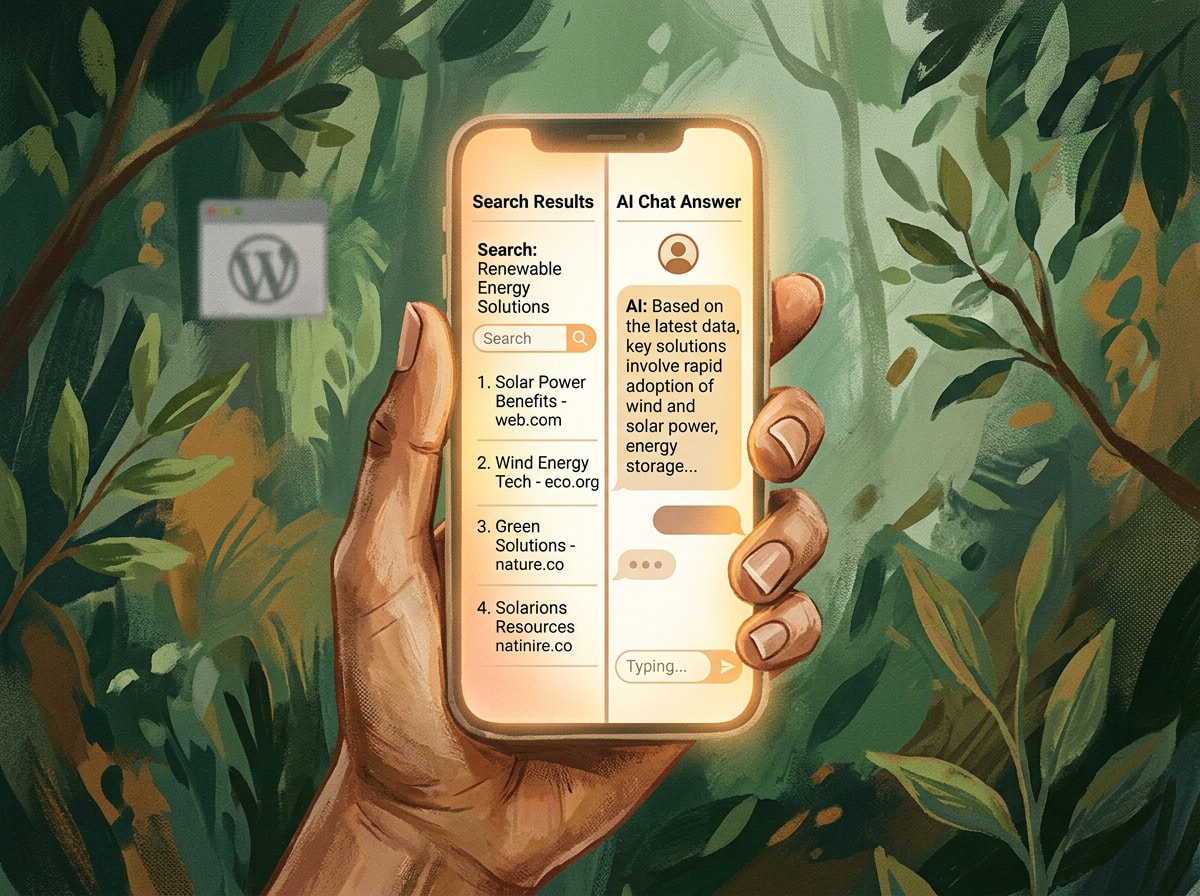
Your homepage now is a Google search snippet. It's a ChatGPT answer that may or may not mention your name. It's a Reddit thread where someone forms an opinion about your category before they've ever heard of you specifically. Your brand's first impression increasingly happens across a dozen surfaces you don't control, long before anyone opens your actual website.
The measurement problem is arguably worse than the traffic problem
For roughly 25 years, digital marketing sold itself to executives on the promise of precise attribution. Every dollar could supposedly be tracked back to the channel that produced it. That promise was already fraying, and now it's mostly gone, for four structural reasons that have nothing to do with how good your tracking setup is.
| Why attribution breaks down | What's actually happening |
|---|---|
| Cookie rejection | Only around 30% of users accept cookies, and Safari blocks third-party cookies by default |
| Ad and analytics blockers | Somewhere between 20% and 60% of browsers block analytics tracking outright, higher among tech-savvy audiences |
| Multi-device journeys | The average person now uses 3.6 devices, making cross-device identity nearly impossible pre-login |
| Privacy regulation | GDPR, CCPA, and LGPD make persistent tracking legally impractical across most global markets |
Then there's dark social, which is its own separate mess. In one experiment, traffic sent from TikTok, Slack, Discord, WhatsApp, and Mastodon showed up in Google Analytics as 100% direct traffic, no referral data at all. Even a portion of LinkedIn and Instagram DM traffic gets swallowed the same way. If your community shares your content in a Slack group or a WhatsApp thread, your analytics will never show you that it happened. It just becomes an unexplained bump in direct traffic that nobody can trace back to anything.
Even the traffic you can measure might be lying to you
Here's the part that should really change how you think about reporting. A peer-reviewed study published in IEEE Access documented month-long blackout experiments Dropbox ran across its mobile advertising and search engine marketing channels. They simply turned entire ad channels off and measured what actually changed.
| Channel | Attributed ROAS (what the dashboard showed) | Causal ROAS (what actually happened when ads were off) |
|---|---|---|
| Mobile advertising | 1.53 | 0.70 |
| Search engine marketing | ~2.0 | 0.92 |
Source: IEEE Access, "From Attribution to Causality in Digital Advertising," Dropbox blackout experiments
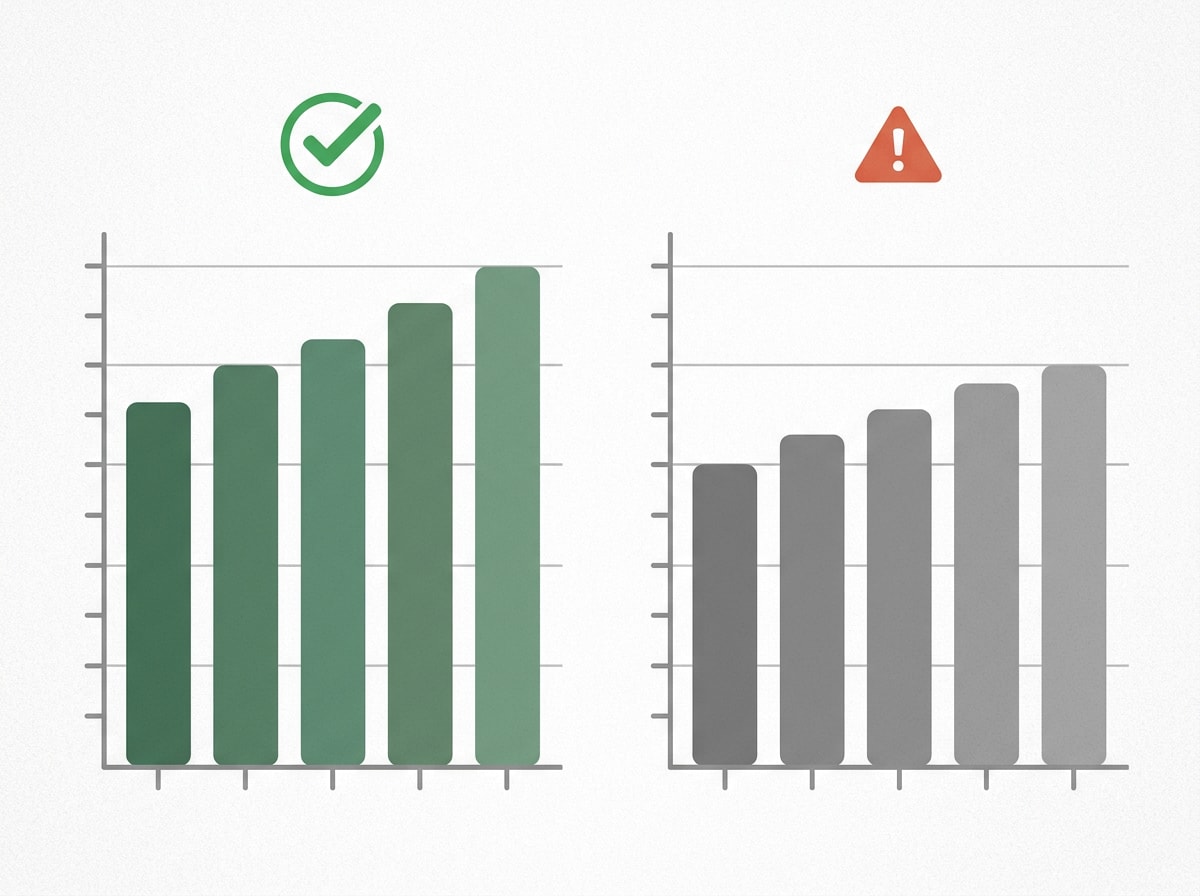
Both channels looked profitable on paper. Both were actually losing money once the causal effect was isolated. Dropbox's own researchers noted that attributed outcomes across the industry can overstate causal impact by two to ten times. Based on this, Dropbox reallocated $25 million away from the low-incrementality spend, and their portfolio's lifetime value to customer acquisition cost ratio improved by 53%. This is a publicly traded company running rigorous science on its own budget, and it still found that its dashboards were telling a story that wasn't true.
So what do you actually do about this on Monday
None of this means marketing stopped working. It means the old scoreboard was measuring the wrong thing, and the old playbook of publish-and-wait doesn't hold up on its own anymore. Here's the five-part shift that actually works with the web as it exists right now, not the web as it existed in 2015.
Step 1
Build on rented land
→
Step 2
Keep one owned channel strong
→
Step 3
Drop traffic as a KPI
→
Step 4
Influence the public record
→
Step 5
Treat content as a service
1. Build on rented land, on purpose
For years the conventional wisdom was don't build on rented land, meaning don't put all your energy into a platform you don't own. That advice made sense in a world where owned traffic was easy to earn. It's harder to fully agree with today. For roughly every one visitor who reaches your website, roughly a hundred people are getting to know your brand on platforms you don't control at all. That's simply where the attention lives now.
The practical version of this is publishing genuinely useful, standalone content on the platforms your specific audience already pays attention to, written to teach something without requiring a click to finish the thought. Where that platform lives is different for every company, even within the same industry, because it depends entirely on where your specific buyers actually spend their time.
2. Keep one owned channel genuinely strong, and that channel is email
Every few years someone declares email dead. It never is. Email open rates have barely moved over two decades, hovering in the low 30s, and click rates have sat in a stable 2 to 4% band for just as long. No algorithm change can suppress an email that's already sitting in someone's inbox, and no platform can hide it from the person it was sent to. Every bit of attention you earn on rented platforms should ultimately feed this one list you actually own.
3. Drop traffic as your headline KPI
Traffic is a fine secondary signal. It's a bad thing to optimize for directly unless your business model literally sells ad impressions. HubSpot's traffic collapse alongside its record revenue year is the clearest possible illustration that these two numbers can move in completely opposite directions. If your reporting deck still leads with sessions, you're likely reporting on the wrong metric to your own board.
✅ What to track instead
Audience (followers, keyword volume, returning visitors) tells you if you're building a base. Reach (impressions, email subscribers, views) tells you if you're being seen. Interest (engagement, branded search, comments) tells you if people care. Sales (conversions, incremental lift) is the outcome all of the above should be leading toward. Track the leading indicators against the business outcome, and look for correlation over time rather than single-touch proof.
4. Influence the public record before someone else does
Search increasingly captures demand that was already created somewhere else entirely. A more realistic buyer journey looks like this: someone sees a founder's LinkedIn post, hears the same founder on a podcast, gets a newsletter mention, hears a peer drop the brand name in a Slack channel, and only then Googles the brand name directly. Analytics will credit that final Google search with the entire conversion. In reality, the four steps before it did the actual work of creating the demand.
📈 The data behind it
A Foundation Inc. analysis of 8,566 B2B SaaS keywords found Reddit outranking every competing vendor simultaneously on more than half of shared keywords in three of four verticals studied, covering roughly 957,540 monthly searches. The longer and more specific the search term, the larger Reddit's advantage grows. Buyers are forming opinions about your category inside forum threads before they ever reach your website.
The takeaway isn't to go spam subreddits with your product name. It's that the reviews, forum threads, comparison posts, and third-party mentions circulating about your category right now are the material AI systems cite and summarize when someone asks a question in your space. If you're not part of that conversation authentically, you're effectively invisible at the exact moment a buyer is forming their opinion.
5. Treat every piece of content as a service with a client and a job to do
The most useful operational shift is assigning every piece of content an internal client and a measurable job, rather than producing content because a calendar says it's Tuesday. A case study serves sales, measured by win rate. A how-to guide serves customer success, measured by ticket deflection. A benchmark report serves corporate communications, measured by backlinks and speaking invitations earned. If a piece of content can't answer who it serves and what job it's supposed to do, it isn't ready to be made.
The weekly loop that makes all of this operational
1
Pick two to three channels your audience actually pays attention to
Not where you wish they'd click. Where they actually spend time right now.
2
Publish one to two zero-click assets per week
Content that delivers full, standalone value in the feed itself, no click required to get the point.
3
Repurpose each idea across formats
One insight can become a post, then a blog article, then a newsletter section, then a podcast talking point.
4
Capture the demand you've created
Email sign-ups, branded search, demo requests, and direct traffic are how you collect value from all that rented-land activity.
5
Review monthly, adjust quarterly
Check your correlation dashboard once a month. Revisit which channels are actually earning attention once a quarter.
💡 A related read
If forum research is a new muscle for your team, we've gone deeper on turning raw Reddit threads into usable content and keyword insight in our guide to using Reddit for marketing research, and on why efficiency gaps like this one tend to widen inside fragmented marketing setups in our piece on the multi-agency marketing trap.
The banking account mental model
The simplest way to hold all of this in your head is to think of content as a banking system. Every zero-click post that delivers real, standalone value is a deposit. It builds goodwill with the platform's algorithm and trust with your actual audience. Every ask, subscribe to the newsletter, book a demo, create a free account, is a withdrawal against that balance. A rough working ratio is about five deposits for every one withdrawal. Earn the goodwill first. Spend it deliberately, not constantly.
The job of marketing was never really to drive the click. The click was always just a proxy for something else: understanding, trust, recall, and preference. Those are the things that actually get built now, across dozens of surfaces, most of which will never show up cleanly in Google Analytics. The founders who accept that early, and start reporting on the right things instead of the easy things, are the ones who'll still be standing when the next platform decides to suppress links too.
