


SEO / GEO / LLM
A few weeks ago I was digging through a client's referral traffic and saw something I've now seen dozens of times this year: a chunk of visitors landing on a page after asking Claude a question that had nothing to do with a keyword we targeted. They asked something narrow. Something almost too specific to bother writing about, if you were still thinking like it's 2019. And the answer Claude gave them traced straight back to a paragraph we wrote eight months earlier.
I've been doing this long enough to remember when that sentence would have made no sense. You picked a keyword, you built content around it, you watched the ranking. That was the whole job. Now I'm watching AI engines pull sentences out of blog posts and hand them to users as answers, sometimes with a link, sometimes without. And the posts that keep showing up in those answers are almost never the ones stuffed with keywords. They're the ones that picked a narrow lane and said something real about it.
I want to walk through why that's happening, what the data actually shows, and what I'd tell a client who asked me to fix this tomorrow.
A story that's been floating around, and why it stuck with me
Earlier this year, a writer posted about an experience a lot of us are starting to have. He'd written some long, dense articles the year before, the kind of posts he assumed almost nobody would finish reading because of the length. Then he started noticing Claude condensing his own arguments back to him in conversations, sometimes citing the post directly, sometimes just clearly drawing from it. His takeaway was that if you write something genuinely insightful on a topic narrow enough to actually own, and people link to it, you have a real shot at shaping what AI tools say about that topic a year later.
Another writer chimed in with something I think is more important than it looks. He said his content wasn't even particularly insightful. It was just specific. And it still got pulled into AI answers within six months of publishing. Even Google's own John Mueller reposted the thread with a one-line endorsement: write more insightful, useful stuff.
I don't think either of those writers is wrong. But I want to push a little further, because "be specific" is the kind of advice that sounds true and then evaporates the second you sit down to write. What does specific actually mean, and can we prove it matters instead of just believing it?
💡 Did You Know
Ahrefs analyzed 174,048 pages across 560,346 AI Overviews and found the correlation between word count and citation position was 0.04, which is statistically almost nothing. More than half of the pages Google's AI cites are under 1,000 words. Length was never the variable that mattered. Read the full study here.
That study confirmed something I'd already started to suspect from watching client accounts. We had a client publish a 4,000 word "ultimate guide" last year that barely got touched by AI search, and the same month a competitor published something a third of the length on one narrow sub-question and it started showing up in Perplexity answers within weeks. Length wasn't the difference. Focus was.
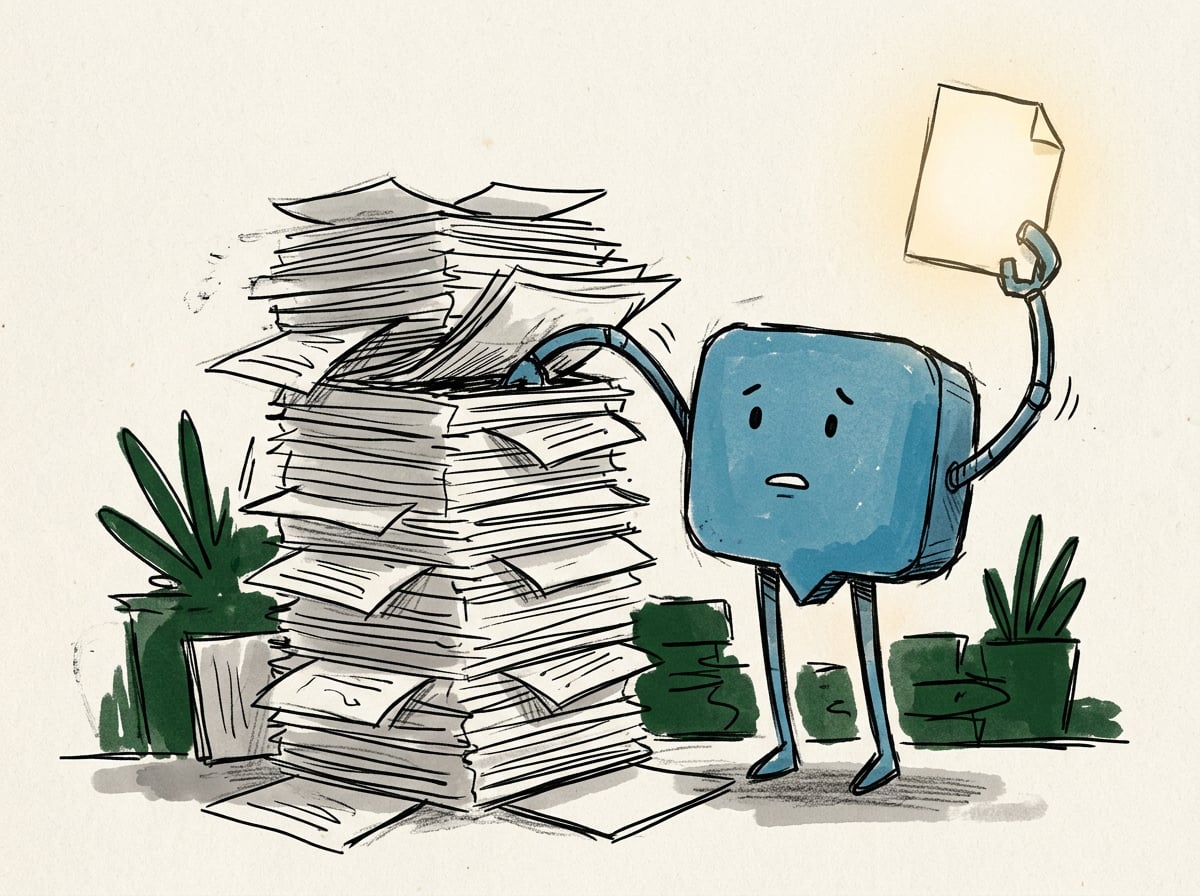
AI search doesn't reward volume. It reaches into the pile and pulls out the one source that actually answers the question.
Why keyword thinking is actively working against you now
SEO built its whole foundation on keywords for good reason. Search engines used to be pattern matchers. You said the phrase, you got found for the phrase. That approach is genuinely over two decades old at this point, and it made sense when the thing reading your page was a much simpler piece of software.
Large language models don't work that way. They're not scanning for a phrase match, they're trying to understand what you're actually claiming and whether it's worth repeating to someone. A page that circles a topic mentioning every possible variant of a keyword reads, to an LLM, like a page that isn't sure what it's actually saying. A page that picks one claim and defends it clearly reads like something worth citing.
I wrote about this exact shift a few months back in Why Your Content Won't Rank (And What to Actually Do About It), and the pattern hasn't changed since. A small number of sites keep getting cited over and over, and it's rarely the sites with the most content. It's the sites whose content answers one thing cleanly.
| Old SEO Habit | What AI Search Rewards Instead |
|---|---|
| Cover a broad keyword and all its variants | Own one narrow question completely |
| Pad word count to look comprehensive | Say the specific thing and stop |
| Write for the search engine crawler | Write for a reader who will link to it |
| Chase high-volume head terms | Chase the exact question nobody else answered well |
The part nobody wants to hear: being insightful isn't the whole job
I've been writing in one form or another for most of my career, and I'll tell you what I've come to believe based on that time, not based on a study. Insight is nice. Insight is also not the reason most cited content gets cited. The reason is that it stayed on one topic long enough to be quotable.
The moment a piece wanders, whether that's a blog post, a poem, or a client email, the reader loses the thread. AI systems are trained on how people write and how people respond to writing, so this isn't some separate machine preference. It's the same preference a tired human reader has at 11pm scrolling on their phone. Say the thing. Don't decorate it. Don't hedge it with six tangents. If a sentence doesn't serve the specific claim you're making, cut it, even if it's a good sentence.
That's brutal advice to actually follow because good writers love their tangents. I love mine. But every time I've gone back through a draft and removed the parts that were "interesting but not on topic," the piece gets sharper, and lately, it gets cited more.
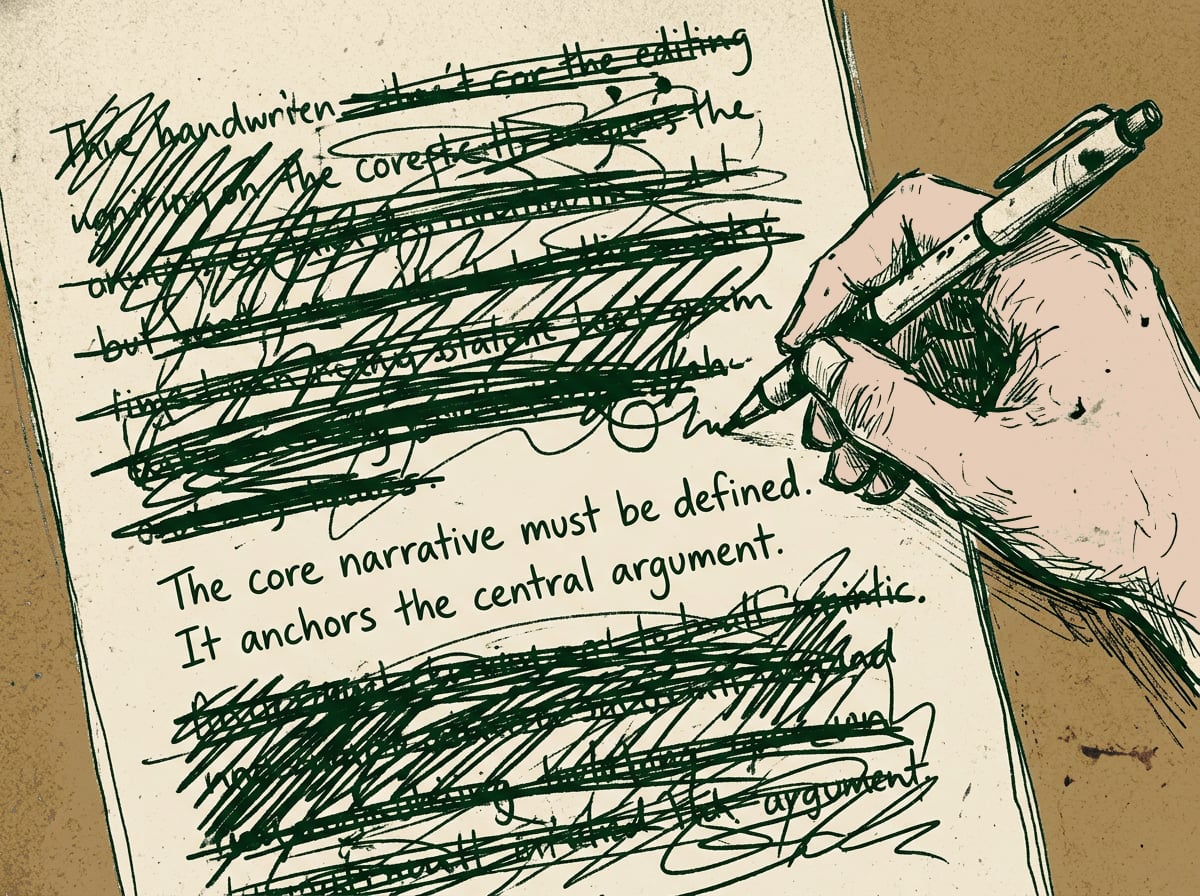
Every sentence that isn't proving your one point is a sentence an AI system will skip right past.
📊 Did You Know
Ahrefs studied 75,000 brands and found that branded web mentions correlate with AI Overview visibility at 0.664, compared to just 0.218 for raw backlink counts. In plain terms, being talked about specifically and by name now matters roughly three times more than being linked to generically. See the full breakdown from Ahrefs.
That stat matters more than it looks like at first glance. It means the old link-building playbook, where you got a mention from anywhere just to build authority, isn't what's driving AI visibility anymore. What's driving it is specific, memorable mentions tied to a specific claim or a specific product. Generic praise doesn't stick. Specific praise does.
What "specific enough" actually looks like on a page
I get asked this constantly, so let me be concrete instead of vague about it, since vague advice about specificity would be a little embarrassing.
- Narrow the claim before you write a word. Not "how to do content marketing" but "why a 400 word page outranked our 3,000 word guide in AI Overviews." One question, one answer.
- Front-load the answer. Don't build up to it for three paragraphs. Say the specific finding, then support it.
- Use numbers you can defend. Vague claims get skipped. A precise number with a source behind it gets lifted into an answer.
- Cut anything that isn't in service of the one claim. This is the hardest one and the one that actually moves the needle.
- Let one page be about one thing. Resist the urge to turn every post into an "ultimate guide." A page trying to answer twelve questions rarely gets quoted for any of them.
We laid out a similar framework a while back in The Enterprise AEO Playbook, but I'll be honest, the version I just gave you above is the stripped down one I actually use with clients now. The playbook works. The five bullets above are what makes the playbook possible.
Why this is actually good news, not bad news
There's a reasonable worry going around, and I don't want to skip past it. Someone in that same social media thread I mentioned earlier pushed back hard, arguing that the economics don't work anymore. Why put in real effort on a piece of writing if an AI tool is just going to absorb it, repeat the insight, and give the original writer nothing back, no traffic, no credit, no compensation.
That frustration is fair. The environment for creators genuinely is harder right now than it used to be. But I'd offer a different way to look at it, one I actually believe rather than one that's just comforting. If your specific, narrow, well-argued piece is the one an AI system keeps drawing from, that means your specific expertise is now shaping how an entire category of people understand a topic. That's a different kind of reach than a page view. It compounds in ways a click never did.
I wrote about this shift from a slightly different angle in Evergreen Content Is Dead. What Replaces It Isn't a Tactic, It's a Person, and I still think that's the right frame. The brands and writers winning right now aren't the ones publishing the most. They're the ones whose specific point of view is distinct enough that it survives being paraphrased by a machine and still sounds like them.
⚠️
A Quick Gut Check
If you deleted every sentence from your last blog post that wasn't directly proving your main point, how many sentences would be left? If the answer is "most of them would survive," you're already writing specific. If the answer is "not many," that's your next edit, not your next new post.
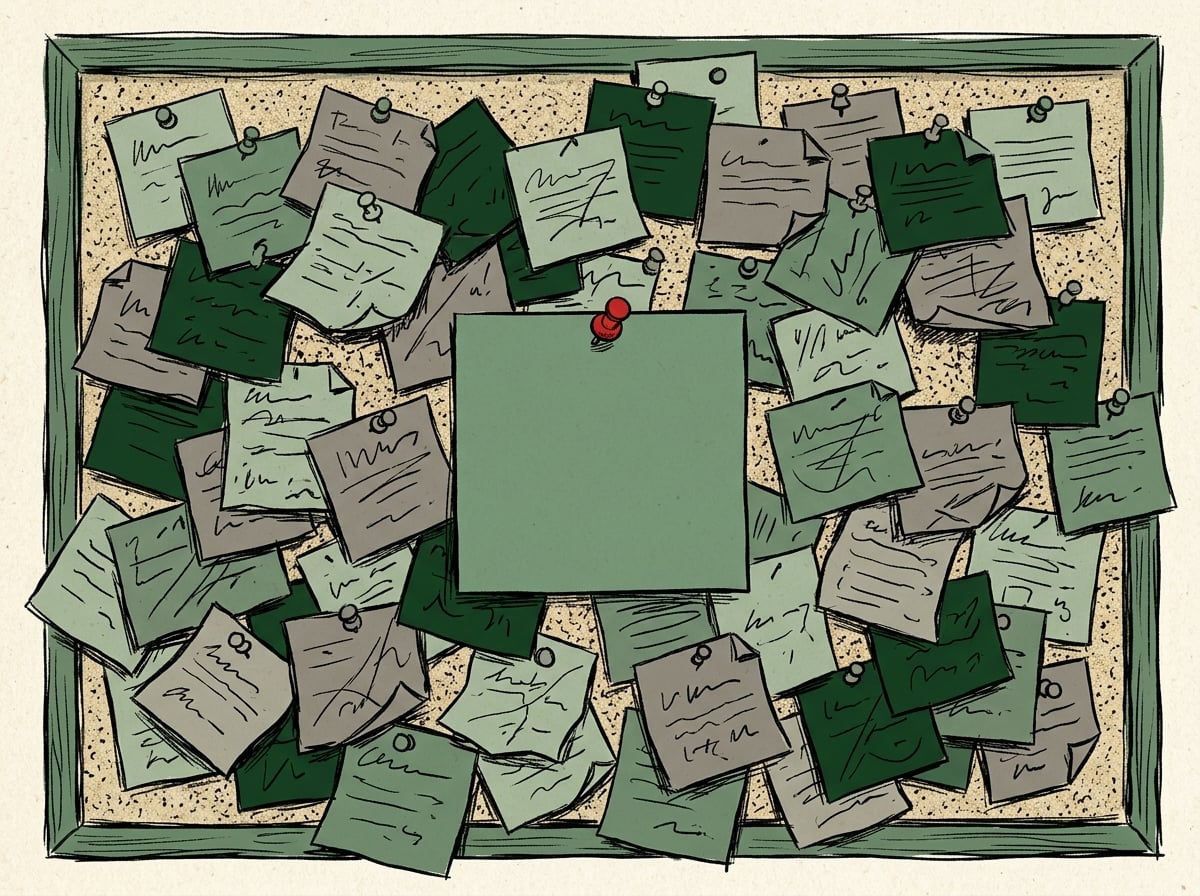
One clear note beats a corkboard full of scattered ones. The same goes for a piece that tries to answer everything at once.
A quick word on what "insightful" is actually doing for you
I want to separate two things that get lumped together constantly: being insightful and being clever. Clever writing is fun in small doses and exhausting in large ones. A joke here, a sharp observation there, that's seasoning. When the seasoning becomes the meal, the reader loses the plot, and so does the model reading it on their behalf.
Insight, on the other hand, is just noticing something true that most people writing about your topic haven't bothered to say clearly. You don't need a journalism degree for that. You need to have actually done the thing you're writing about, closely enough to notice the detail everyone else glosses over. That's the entire secret, and it's a frustrating one to hear because it means there's no shortcut. You either know the specific thing or you don't.
I'll give you a small example from my own work. For years I wrote generic posts about "improving your SEO." They did fine. Then I started writing about the exact mistake I saw repeatedly in client accounts, things like the specific reason a well-ranked page still wasn't getting cited in AI answers. Those posts, narrower and less "helpful" on the surface, are the ones that keep showing up when I check where our traffic and citations are actually coming from.
What I'd actually tell you to do this month
If you're staring at a content calendar right now trying to figure out what to change, here's the honest version of my advice, not the version that sounds good in a deck.
- Pull your last ten published pieces and ask which ones answer exactly one question. Be ruthless about it. "Mostly one question" doesn't count.
- Stop writing "ultimate guides" for topics you haven't actually mastered firsthand. Write the narrow thing you do know cold.
- Put your most defensible number or claim in the first three sentences, not buried in paragraph six.
- Get specific mentions from people who know your name, not generic backlinks from anywhere that'll take one.
- Give yourself permission to publish something short. The data backs you up here, and so does every AI answer I've traced back to a source this year.
None of this requires a bigger budget or a fancier tool. It requires the willingness to say less, more precisely, and to trust that the narrow thing you know well is worth more right now than the broad thing you're guessing at.
I keep coming back to that first story, the writer who assumed nobody would read his long, specific posts and then found Claude quoting them back to readers a year later. He wasn't trying to game anything. He just wrote the specific thing he actually understood and let it sit there. Turns out that's still the whole game. It's just a different scoreboard now.
