


SEO / GEO / LLM
I've been staring at client dashboards for over a decade now, and I can usually tell within a week when something in the search world has actually shifted versus when it's just Twitter noise. This one is real. Not because AI search is suddenly sending massive traffic (it isn't, at least not yet), but because the way people find and trust brands is quietly being rewired underneath us.
Over the last few months, I've pulled data across hundreds of client accounts we manage, plus a good bit of third-party research, to figure out what's actually happening versus what's just getting hyped on LinkedIn. Some of what I found surprised me. Some of it confirmed what I've suspected since ChatGPT started showing up in referral reports two years ago. All of it changed how I'm advising clients for the back half of this year.
This isn't a hype piece. I'm not going to tell you traditional SEO is dead, because it isn't. But I am going to walk you through the numbers that made me rethink how we allocate budget and attention, and where I think the real opportunity sits right now, before everyone else catches on.
🔍 The Traffic Is Small. That's Exactly Why Most People Are Getting This Wrong
Here's the thing nobody wants to say out loud: AI search traffic is still a rounding error for most sites. Across the accounts I looked at, it's currently under 1% of total organic traffic. If you're a founder or CMO looking at a Google Analytics dashboard right now, it would be easy to glance at that number and move on.
That would be a mistake, and I'll tell you why in a second. But first, let's ground ourselves in what's actually happening.
💡 Did you know?
Even the biggest outlier we found, a site that gets an unusual 42.8% of its traffic from AI search, is the exception that proves the rule. Among sites doing at least a million organic visits a month, the ceiling for AI search traffic sits closer to 5%.
Where I think this actually gets interesting is in the growth curves. One B2B SaaS client of ours saw AI search traffic jump 127% in three months. That's not a fluke, that's a trajectory. A travel client I worked with is climbing about 12% week over week. When something small is compounding that fast, ignoring it because the base number looks tiny is how you get caught flat-footed in twelve months.
I wrote about a related pattern in The Enterprise AEO Playbook, and the short version is this: the brands winning right now aren't the ones with the biggest traffic numbers from AI platforms today. They're the ones building the infrastructure to capture that traffic before it becomes obvious to everyone else.
📊 ChatGPT Still Owns the Room, But the Guest List Is Changing
If you're only going to optimize for one AI platform this year, it's still ChatGPT. Roughly three out of every four AI-referred visits we tracked came from it. But the story underneath that headline number is way more interesting than "ChatGPT wins."
Independent research backs this up too. Previsible's analysis of 6.77 million LLM sessions found ChatGPT commanding over 92% of trackable LLM referral traffic across its panel, while Claude grew 64x over the same tracked period and quietly overtook Perplexity. That's the pattern I'm seeing in our own client accounts almost exactly. ChatGPT isn't losing its grip. It's just no longer the only name that matters in the room.
| Platform | What we're seeing |
|---|---|
| ChatGPT | Still the dominant referrer, roughly 3 in 4 AI-driven visits |
| Gemini | Doubled in a single quarter, now firmly the #2 referrer |
| Claude | Jumped from under 1% to 8% share in 90 days |
| Perplexity | Present, but not a major traffic driver yet |
| Copilot | Present, but not a major traffic driver yet |
I'd also point you to Semrush's clickstream analysis of 17 months of ChatGPT data, which found outbound referral traffic growing 206% year over year even as engagement metrics plateaued elsewhere. The takeaway I keep coming back to with clients: don't build your entire AI visibility strategy around one platform's current market share. Build it around being findable and citable everywhere, because the leaderboard is still being written.
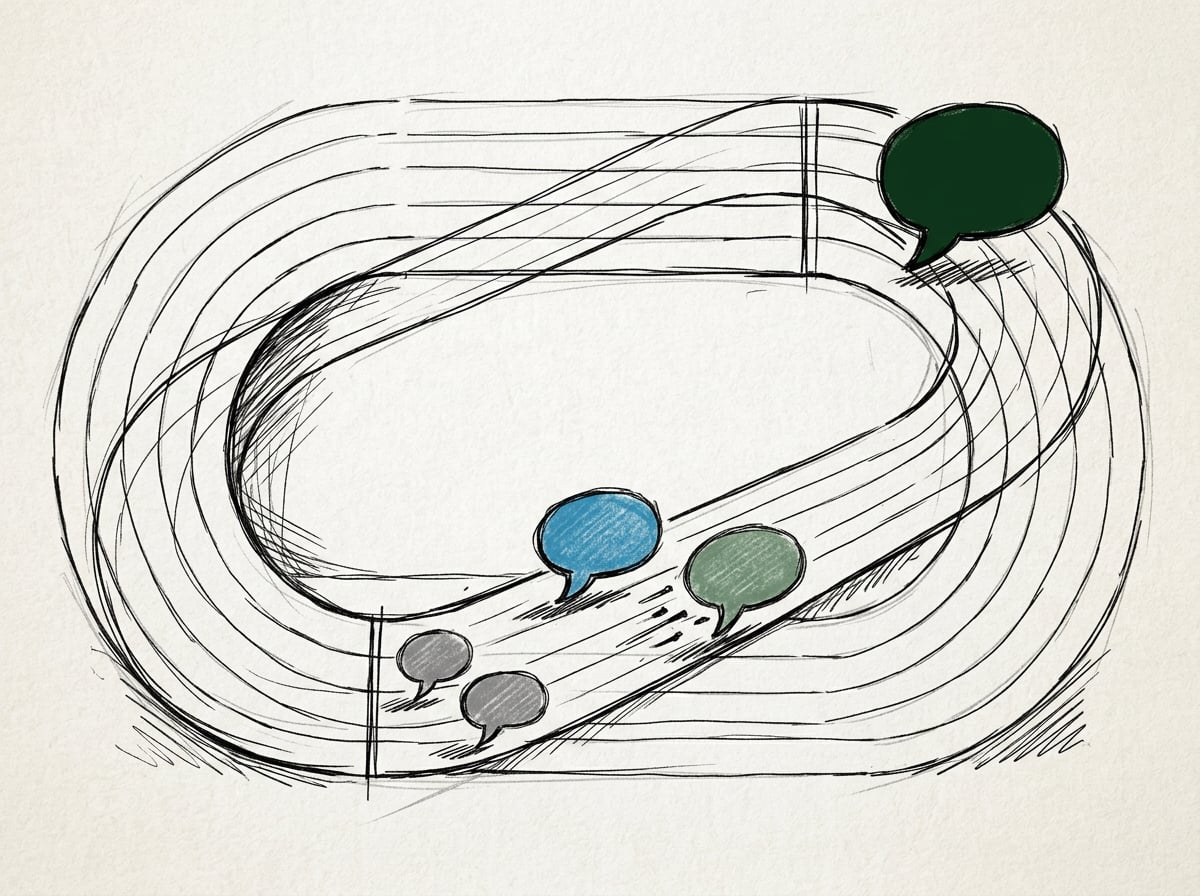
For every click an AI search result sends you, roughly 20 more searches are happening in the background where your brand never gets clicked at all.
That single stat changed how I talk to clients about what "success" even means here. If you're only measuring AI search performance by referral traffic in Google Analytics, you're missing the vast majority of what's actually happening. Someone asks ChatGPT a question, your brand gets mentioned or recommended, and they never click through. They just remember the name, or they go straight to your site by typing your URL. That shows up as direct traffic, not AI referral traffic, and it completely understates what's really going on. I dug into this exact blind spot in Why AI Keeps Citing the Same 30 Websites, and it's worth a read if this idea makes you as uncomfortable as it made me.
🎓 Education, Health, and B2B Are Living in the Future Right Now
Not every industry is feeling this shift equally, and honestly, that's a relief for some of my clients and a five-alarm fire for others.
| Industry | Share of AI search traffic |
|---|---|
| Education | 46.17% |
| Health | 14.42% |
| B2B | 12.14% |
If you run marketing for a university, a health system, or a B2B software company, I'll be blunt: AI search isn't a "someday" channel for you anymore. It's a primary discovery channel today, whether your leadership team has acknowledged that in a budget meeting yet or not. Prospective students are asking ChatGPT to compare programs. Patients are asking it to explain symptoms and treatment options before they ever touch a search engine. Buyers are asking it to shortlist vendors before a single sales rep gets a call.
⚡ Why this matters for B2B specifically
Claude's consumer numbers are small compared to ChatGPT, but its footprint inside enterprise workflows is not. If you sell into companies where decision-makers are already living inside Claude for research and drafting, showing up well there matters more than the raw traffic share suggests.
💥 Click-Through Rates Are Getting Crushed Below the Top Two Spots
This is the part of the research that actually made me sit up straight. We've all felt CTR softening over the past couple of years, but seeing the actual numbers side by side made it real for me in a way vague "SEO is dying" posts never do.
On desktop, Position 1 and Position 2 have held up reasonably well. But everything below that has fallen off a cliff.
| Position | Before | Now |
|---|---|---|
| Position 1 | 13.06% | 12.40% |
| Position 2 | 4.74% | 4.59% |
| Position 3 | 4.88% | 2.47% |
| Position 4 | 2.79% | 1.05% |
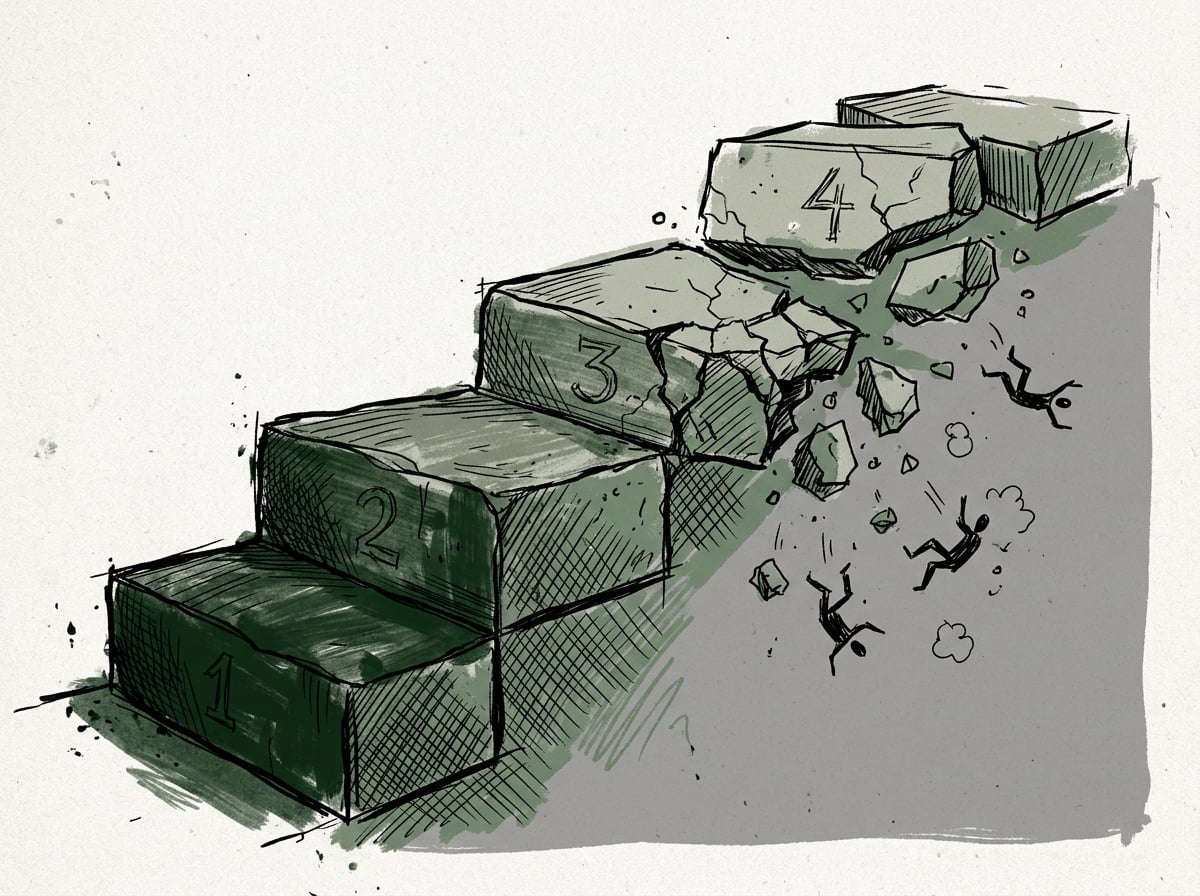
Position 3 lost nearly half its clicks. Position 4 lost more than half. This isn't a fluke in our own data set either. Seer Interactive's study of 3,119 informational queries across 42 organizations found organic CTR falling 61% and paid CTR falling 68% where AI Overviews were present. Ahrefs, working from a much larger sample of 300,000 keywords, found a comparable 34.5% CTR decline in their initial analysis and a further slide when they revisited the data with updated figures published on eMarketer. Different methodologies, same direction, same story.
What this tells me, and what I've been telling clients directly, is that ranking #3 through #6 used to be a perfectly respectable place to live. Now it's close to invisible. If your content strategy is built around "get in the top 10 and the clicks will come," that strategy is quietly dying underneath you, even if your rankings haven't moved an inch.
So what do you actually do about it?
- Fight for the top two spots specifically. The gap between position 2 and position 3 is now the real cliff edge, not the gap between page 1 and page 2.
- Stop measuring success by rankings alone. A page ranking #4 that never gets clicked isn't doing its job anymore, no matter how nice that rank tracker screenshot looks in a report.
- Get comfortable with visibility as its own metric. Being cited in an AI answer without a click is still a win. It's just a different kind of win than we're used to measuring.
📉 Google's AI Overviews Are Getting Shorter, and Nobody Fully Knows Why
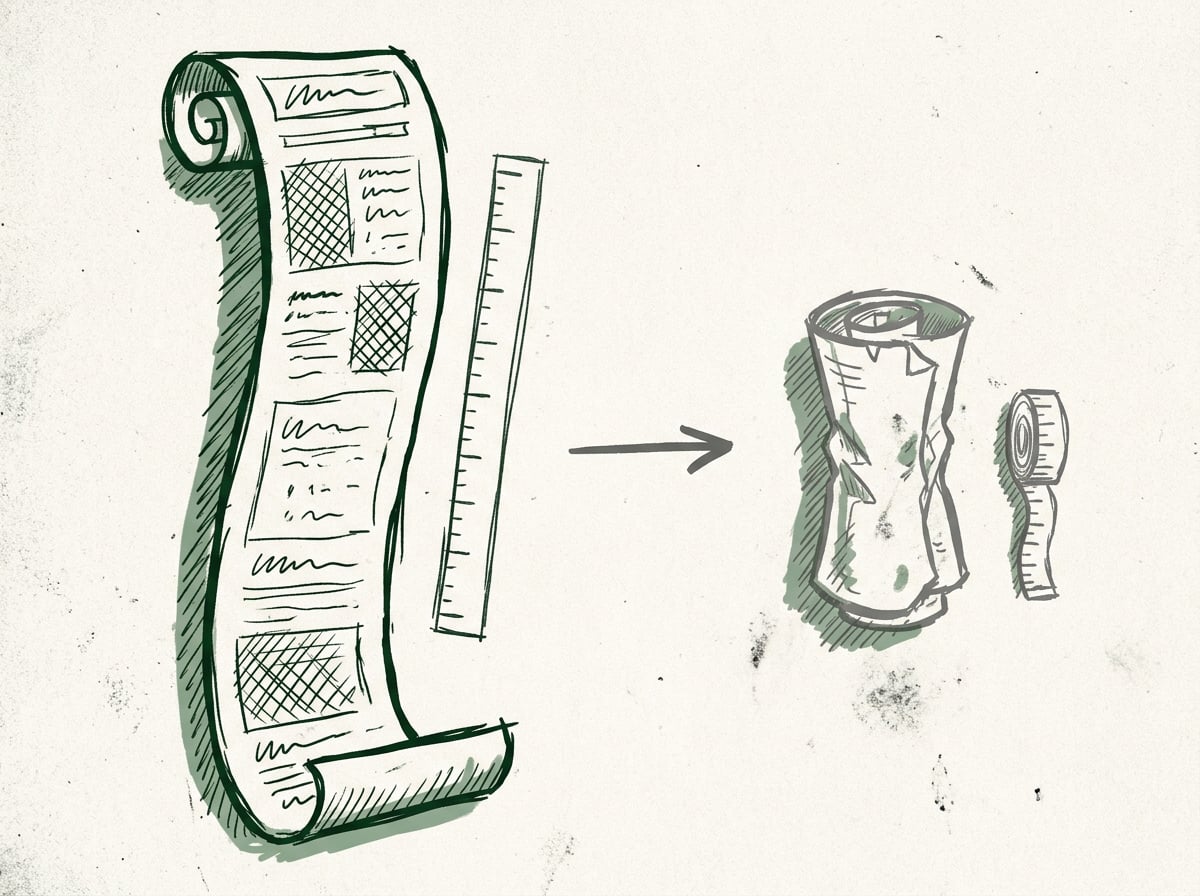
This one caught me off guard when I first saw it in our data. The average length of an AI Overview dropped by roughly 70%, from about 5,300 characters down to around 1,600, in the span of a single month last year. The number of keywords triggering an Overview stayed basically flat. Google just started saying a lot less in each one.
🤔 A few theories on why
Google might be nudging users toward AI Mode for deeper answers, protecting ad inventory that longer Overviews were pushing below the fold, or making room for other SERP features like Flights, Hotels, and Local results that were getting squeezed out. We can't know for certain which one it is, and it's likely some mix of all three.
Whatever the reason, the practical implication is the same. Shorter Overviews mean there's actually more room for traditional organic results to catch a scroll and a click again, at least on the queries where the Overview doesn't fully answer the question. It also means the fight for citation inside that shrinking Overview real estate is getting more competitive, not less. Fewer characters means fewer sources get named.
🧭 Where I'd Put My Attention If I Were You
I get asked some version of "so what do we actually do differently" in almost every client call these days, and my answer has evolved a lot over the past year. Here's where I've landed for right now.
Treat citations as seriously as rankings
Getting mentioned by name inside an AI answer, even without a click, builds the kind of brand recall that shows up later as branded search and direct traffic. If you want a deeper walkthrough on how to actually earn those citations rather than hoping for them, I put together a full playbook on getting AI Overviews to cite you instead of your competitors.
Don't abandon the top two positions
With Position 1 and 2 CTR holding relatively steady, that real estate is more valuable than ever, not less. The middle of page one is where the erosion is happening.
Diversify beyond ChatGPT, even while prioritizing it
Claude's 90-day jump and Gemini doubling in a quarter tell me the ecosystem is still shifting fast. Building content and structured data that reads cleanly across multiple AI platforms, not just one, is cheap insurance against a market that hasn't settled yet.
Reset how you report on this internally
If your monthly reporting still treats AI search as a footnote because the traffic percentage looks small, you're going to have a hard conversation with leadership in a year when a competitor who took this seriously earlier pulls ahead. Set the expectation now that visibility and citation are the leading indicators, and traffic follows later.
None of this means you throw out what's worked for you in traditional SEO. The fundamentals of good content, real expertise, and a site that actually works still matter, arguably more than ever, because AI systems are still built on top of the same web that traditional search crawls. What's changed is where attention needs to sit alongside that foundation.
I'll keep pulling this data as it evolves, because if the last year taught me anything, it's that this landscape moves faster than most of our internal reporting cadences can keep up with. If you want to talk through what any of this means specifically for your brand, you know where to find me.
