


Growth Marketing
I want to be upfront about something. A lot of what I am about to share in this article is not new information in the sense that it has been publicly discussed. But most brands and most agencies are still not acting on it, and that gap between knowing and doing is exactly where growth gets left on the table.
I recently had a conversation with someone who works inside Meta on creative strategy with some of the fastest-growing brands on the platform. They spoke candidly about how the algorithm has changed, what the top disruptor brands are doing differently, and where most brands are still getting it wrong. I have combined those insights with what we see daily across our own client accounts to write this. The result is a practical breakdown of what is actually driving performance on Meta right now.
The Algorithm Has Changed. Your Creative Process Probably Has Not.
Let us start with the most important shift that has happened on Meta in the past two years. The platform's ad delivery system has been rebuilt from the ground up, and most of the old playbooks, narrow audiences, massive A/B testing structures, winning asset iteration, no longer reflect how the system actually works.
The three components driving delivery now are Andromeda (retrieval), Gem (ranking), and Lattice (optimization). Understanding how they work together changes everything about how you should be producing creative.
Andromeda: The Intelligent Librarian
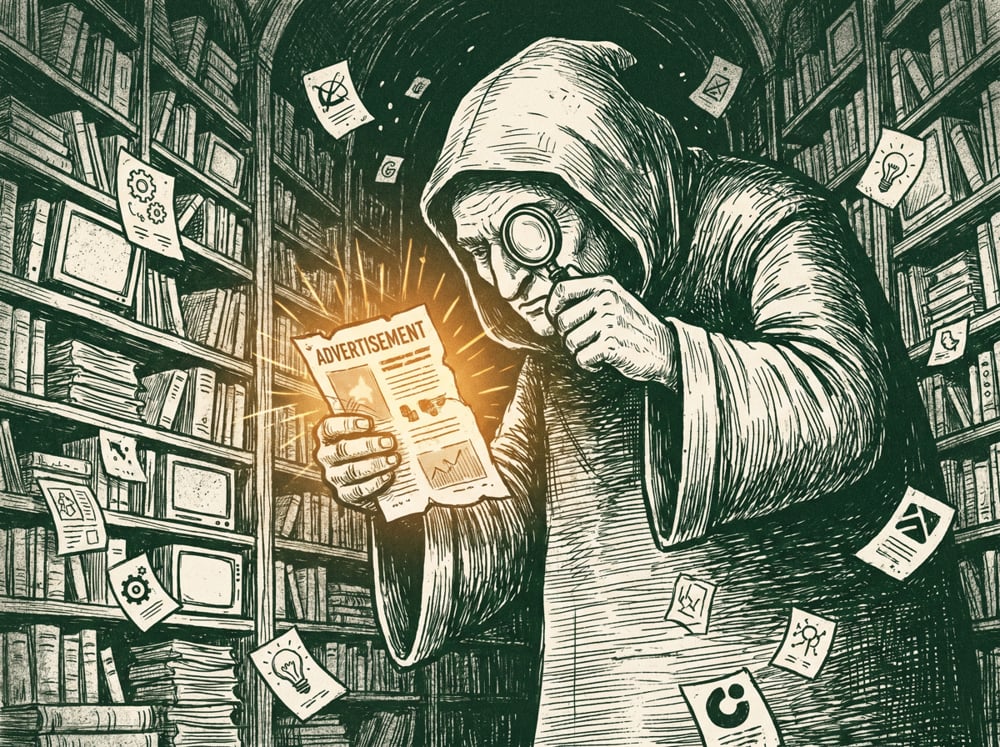
The old system looked at ads the way you would look at a book cover. Metadata, file names, surface-level signals. Andromeda reads the content itself. It understands the sentiment, the message, the emotion inside the creative. Think of it as a super-intelligent librarian who has read every book in the library, not just catalogued the spines.
What this means in practice: Meta is no longer relying on you to define who should see your ad. The creative itself becomes the signal. The platform reads what your ad is about and finds the right audience for it.
💡
The practical implication: Your creative is now your targeting. If your ads all say the same thing in slightly different ways, the algorithm treats them as identical, finds the same people, and your reach stagnates no matter how many assets you produce.
Gem: Getting the Right Ad to the Right Person at the Right Moment
If Andromeda is the librarian pulling the best books from the shelves, Gem is the discerning reader deciding which book is right for this person, right now. It predicts the relevance and likely response to a piece of creative for a specific user at a specific moment. Together, Andromeda and Gem mean that your job is no longer to guess who your audience is. Your job is to give the system a rich, varied set of creative signals and let it do the matching.
📊 Did You Know
In a controlled volume study, running 25 ad variants vs. 5 variants resulted in 171% more purchases, a 50% lower cost per conversion, and this happened despite reaching 59,000 fewer people. More creative diversity outperformed broader reach. Source: Meta for Business
Creative Similarity: The Problem Nobody Wants to Admit They Have
Here is the uncomfortable truth. You could have 200 ad files in your account, and the algorithm might only recognise 20 unique creative signatures. The other 180 are, from the system's perspective, just copies. And all 200 are competing for the same audience.
This is what creative similarity means. The algorithm analyses what Meta internally refers to as a "visual signature," which goes far beyond the file name or thumbnail. It is reading the content, the environment, the talent, the camera angle, the emotional tone, the message. If those things are the same or close enough, it registers as the same ad.
"It's not about having hundreds of different assets, but the right assets. The algorithm will only recognise 20 different signatures. That means your 200 assets are fighting for the same audience." — Meta insider, speaking about creative similarity on the platform
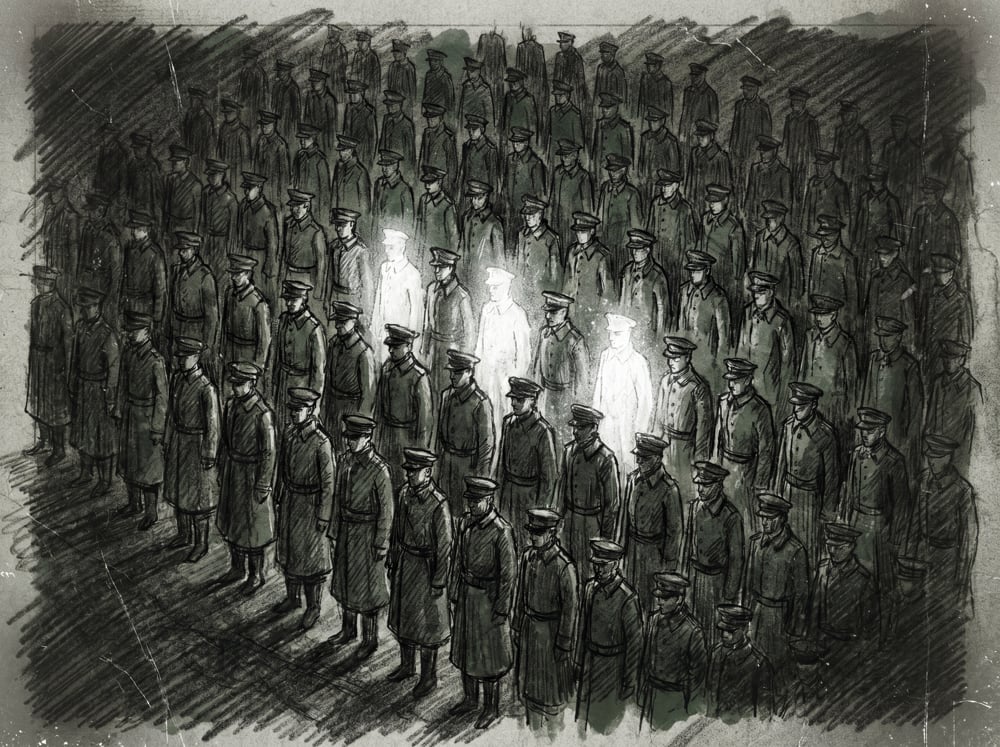
The iteration habit that most brands built during the era of lookalike audiences, changing a background colour, swapping the CTA copy, putting a different track underneath a video, is now actively working against them. Meta's system sees straight through it.
What Actually Counts as a Different Creative Signal?
| Element | Minimal differentiation | Strong differentiation |
|---|---|---|
| Talent / Creator | Same person, different script | Different creators entirely |
| Environment | Same room, different outfit | Different location or setting |
| Camera / Framing | Same angle, slight crop | Different framing, perspective, or format |
| Message / Hook | Same core claim, reworded | Different insight, emotion, or persona motivation |
| Format | Another talking-head UGC video | Podcast format, street interview, voiceover + b-roll, split-screen |
| Emotional register | All ads carry the same tone | Some ads use urgency, some use aspiration, some use humour |
A question that comes up a lot: "If I use the same creator in the same setting but write completely different scripts, is that enough?" The honest answer, based on everything I know, is no. You have not changed enough visual signals. The system sees the same human in the same environment and treats it as a variation, not a new ad. You need to change multiple signals at once.
🎬
On set tip: If you are renting a location for the day, use the whole space. Different rooms, different lighting setups, outdoor areas. The more varied the environment, the more distinct creative signatures you are generating from a single shoot day.
From Personas to Micro-Motivations: The Real Work of Creative Strategy
Most brands are running with macro personas. "Males, 25-35, interested in fitness." That describes tens of millions of people with wildly different fears, goals, and reasons for purchasing. Treating them as a single audience means every ad has to appeal to everyone, which means it truly resonates with no one.
The shift that the best disruptor brands are making is moving from demographic segmentation to psychological and motivational segmentation. Who are the distinct types of people who buy your product, and what is actually driving each of them?
Take a wellness brand as an example. Under one demographic umbrella you might have:
| Micro-Persona | Primary Desire | Core Fear | Message Direction |
|---|---|---|---|
| The High Achiever | Peak performance | Falling behind competitors | Productivity, edge, output |
| The Stressed Professional | Mental calm | Burnout, losing control | Peace of mind, recovery |
| The Health-Conscious Parent | Energy for family | Setting a bad example | Consistency, clean ingredients |
| The New Convert | Quick visible results | Wasting money again | Social proof, fast wins |
These personas require entirely different creative approaches, even if the product is identical.
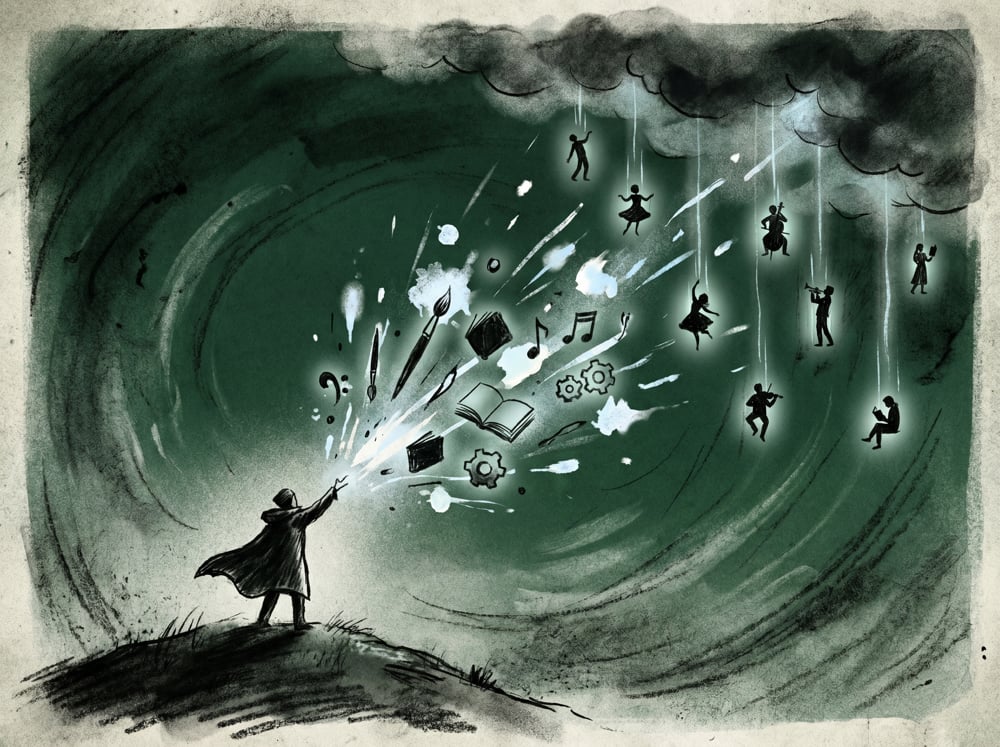
The reason this matters algorithmically, not just strategically, is that each of these personas requires a different insight, different emotional register, and different visual execution. That difference is exactly what feeds Andromeda diverse signals. You are not producing creative variety for variety's sake. You are doing it because your audience is genuinely varied, and the creative should reflect that.
🔍
Where to find these insights: Review mining, customer surveys, and watching organic content that is performing well around your category. The specific phrases your customers use to describe their problems are almost always different to how your brand talks about them. Closing that gap, finding that language, that is the creative strategy work that actually drives performance. Harvard Business Review has a useful framework for understanding how customers actually make decisions that maps well onto this kind of persona work.
Radical Simplification: Why Less Account Structure Means More Growth
There is a version of account management that many brands are still running that looks like this: multiple campaigns, multiple ad sets within each, tightly defined audiences, one or two assets per ad set, and endless manual controls designed to prevent the algorithm from doing anything unpredictable.
That approach was rational in 2018. In 2025 it is actively limiting performance. Every layer of manual structure you add is a constraint you are putting on the system's ability to find the best placement, the best audience, the best moment. You are essentially telling a very capable system to ignore most of what it knows.
The principle Meta refers to internally as radical simplification means fewer campaigns, broader ad sets, and trusting the algorithm to do the distribution work, while you focus all your energy on feeding it better creative. The creative is the targeting now. The structure is largely there to stay out of the way.
30–50%
Partnership Ad Spend
Top brands on Meta consistently allocate this share of budget to creator partnership ads.
171%
More Purchases
Running 25 creative variants vs. 5 in a controlled Meta volume study produced 171% more purchases.
50%
Cheaper Cost Per Conversion
Cost per conversion dropped by half despite reaching 59,000 fewer people in the same test.
The staffing implication of this shift is real. The most valuable person in a growth marketing operation right now is not a media buyer who knows how to set up complex targeting structures. It is someone who genuinely understands both creative and data, who can read the performance signals coming back from an account and translate them into better creative briefs. These people are genuinely hard to find because the left-brain and right-brain departments have been separate for so long.
Partnership Ads: The Cheat Code That Most Brands Are Still Not Using
I want to be careful with the word "cheat code" because it implies something that stops working once everyone discovers it. Partnership ads are not going away. But right now, the brands running them well are getting results that are difficult to replicate any other way, and the majority of brands are either not running them at all or running them badly.
Based on conversations with people working inside Meta's disruptor teams, the top-performing brands on the platform are allocating between 30 and 50% of their spend to partnership ads. The reason is not just authenticity, though that matters. It is signals. When you run an ad through a creator's handle, you are bringing in that creator's audience data, their community's engagement patterns, their content context. You are giving the algorithm a completely different set of signals to work with, which means it can find audiences you would never have reached from your own brand account.
"It's not just nice to have anymore. It's now a must-have. Top brands have understood that partnership ads consistently deliver lower CPA and higher CTR." — Meta insider, on the shift toward partnership ads
The biggest mistake brands make with partnership ads is treating them as a one-off activation or isolating them in their own campaign structure. Both of these mistakes waste exactly the thing that makes partnership ads valuable. The signal benefit only compounds when partnership ads are mixed into your main campaigns, sitting alongside your other creative, contributing their unique signals to the overall account data.
Getting Started Without Overthinking It
- Start with Meta's Creator Marketplace, which now lets you search your brand's own followers for active creators
- Begin with nano or micro creators to test the collaboration dynamic before committing bigger budgets
- Write a clear brief but give creators real creative freedom — the authenticity only works if they are genuinely themselves
- Do not create separate campaigns for partnership ads; fold them into your existing campaign structure
- Think of it as an always-on channel, not a campaign type
- Consider building a creative strategy around a specific expert or personality whose identity runs as a standalone content stream
The Creator Marketplace is genuinely underused. It has filtering tools that go beyond reach and demographics, including performance data for individual creators, which means you can make evidence-based decisions about who to partner with rather than going purely on gut feel or follower count. Meta's official guide to the Creator Marketplace walks through the main features if you have not explored it recently.
The Creative Portfolio Mindset: Stop Thinking in Winners and Losers
One of the most important mental shifts I keep coming back to is thinking about creative output at a portfolio level rather than an asset level. The winner-loser mentality, where you are constantly trying to identify the single best performing ad and then iterate it to death, is what produces the creative similarity problem in the first place.
A healthier framework looks something like this:
| Portfolio Tier | Percentage of Output | Purpose |
|---|---|---|
| Proven frameworks | 60–70% | Reliable performance from known messaging and formats |
| Refreshed proven frameworks | 15–20% | New executions of insights that have worked, with genuine visual differentiation |
| Calculated risks | 15–20% | New themes, new formats, new personas you have not activated before |
The calculated risk bucket is the one most brands cut when budgets tighten, which is exactly backwards. The brands that sustain growth over time are the ones continuously activating new audiences and testing genuinely new creative territories. The 15 to 20% of budget going into calculated risks is what generates the next generation of proven frameworks.
The portfolio mindset also reframes the volume question entirely. If your team is producing 100 ads a week but they all fall into the same creative signature category, you are not running a portfolio — you are running one ad at scale. We break down exactly why this is happening to so many brands right now, and what the strategic fix looks like, in You're Making More Ads Than Ever. So Why Is Performance Getting Worse?
Ready to put this portfolio thinking into practice? We break down the specific tactical moves in 8 Meta Ads Hacks Most Advertisers Never Talk About — including how to clone a winning ad before it dies and why static creatives are outperforming video right now.
📌 Did You Know
Meta is rolling out a Creative Themes reporting feature that will show you what percentage of your content falls into each thematic category. You will be able to see not just what is performing, but where you are over-indexed, so you can identify saturation before it hits your results. If 80% of your content looks like a podcast format, you will see that, and you will know it is time to diversify before the algorithm tells you the hard way.
There is a related point here about survivorship bias in creative analysis. When you analyse your account and look for what to double down on, you are by definition only looking at what you have already tried. A useful discipline, borrowed from Ben Horowitz's approach to strategy meetings, is to start by asking what you are not doing. Where are the personas you have not activated? Where are the age groups you are under-serving? Where are the format categories you have not tested? Gap analysis is at least as valuable as performance analysis.
AI Tools: Where to Use Them and Where to Be Careful
Meta's Advantage Plus creative tools have come a long way in the past twelve months. Text generation, video editing, image-to-video conversion: these are no longer early-adopter features. They are available to everyone in Ads Manager and the brands not using them are missing a genuine time and cost advantage.
But the single biggest pitfall I see consistently in accounts, and something people inside Meta flag regularly too, is over-reliance. AI is a multiplier of your creative thinking, not a replacement for it. A system that does not understand your brand's tone of voice, your specific market context, or the nuances of your customer's emotional state will produce technically competent content that lacks the thing that actually makes ads work: the sense that whoever made this understands you.
⚠️
The rule of thumb: Use AI to accelerate execution. Use humans to direct strategy, insight, and emotional truth. The fastest-growing brands right now are the ones that are excellent at authentic, raw, native content AND are openly using AI tools. It is not an either/or. McKinsey's research on generative AI in marketing points to the same conclusion: AI raises the floor but humans determine the ceiling.
Something I heard from someone inside Meta's creative team that has stuck with me: "Creative will be automated. Creativity will never be." That is a real distinction. The execution of an ad, the editing, the copy variations, the format resizing, all of that is being commoditised. But the insight that makes an ad worth making in the first place, the understanding of what a specific type of person actually fears or wants and how to speak to that honestly, that remains stubbornly human work.
Measurement: Build the Framework Before You Need It
The measurement conversation is one I keep having with clients who are scaling and the honest advice is always the same: build your measurement framework early, before the complexity of your media mix makes it hard to attribute anything cleanly.
The top brands are not relying on in-platform metrics alone. They are looking at the interplay between paid and organic, between Meta and other channels, between online conversion and offline behaviour. Nielsen's research on marketing ROI consistently shows that brands underestimate the cross-channel lift from paid social when they only measure within-platform outcomes.
Incrementality is the north star here. Not "how many purchases did this ad drive according to Meta" but "how many purchases would not have happened without this ad?" That is a much harder question to answer but it is the right one. And getting to a good incrementality measurement process requires establishing clean test structures early, before your media mix gets complex enough that running a hold-out test becomes logistically painful.
One thing worth flagging: bring your creative strategists into measurement conversations. These have historically been siloed, with the performance data sitting with media buyers and the creative team getting a simplified version of the results. The problem is that if the person making creative briefs does not deeply understand what the data is actually saying, the connection between insight and output breaks down.
The One Piece of Advice That Matters Most Right Now
The question I always end on when I talk to brands about this: if you had to give one piece of advice to a brand that wants to become a disruptor by the end of 2026, what would it be? The answer, based on everything I have seen working across accounts and from the conversations I have had with people inside the platform, is the same every time.
Embrace creative diversity with a strategic framework. Stop thinking in terms of winning and losing ads. Build a creative portfolio. Develop a deep understanding of your personas, their motivators, their barriers, and from that build a matrix of creative concepts. Feed the algorithm a rich, varied, intentional set of creative signals and let it reward you for it.
The brands that are winning on Meta right now are not winning because they figured out a loophole. They are winning because they did the harder, slower work of genuinely understanding their customers at a psychological level and then building creative systems that can speak to all of them. That is not a shortcut. But it is the actual path.
🔗
Further reading: If you want to go deeper on creative strategy frameworks for Meta, the Meta for Business resource centre is the most reliable source for platform updates. For the research side of creative strategy, combining SparkToro's audience intelligence tool with direct customer interviews gives you the raw material that makes every brief better. And if you are looking for the tactical side of execution, our 8 Meta Ads hacks that most advertisers never discuss is a practical companion to everything covered here.
